

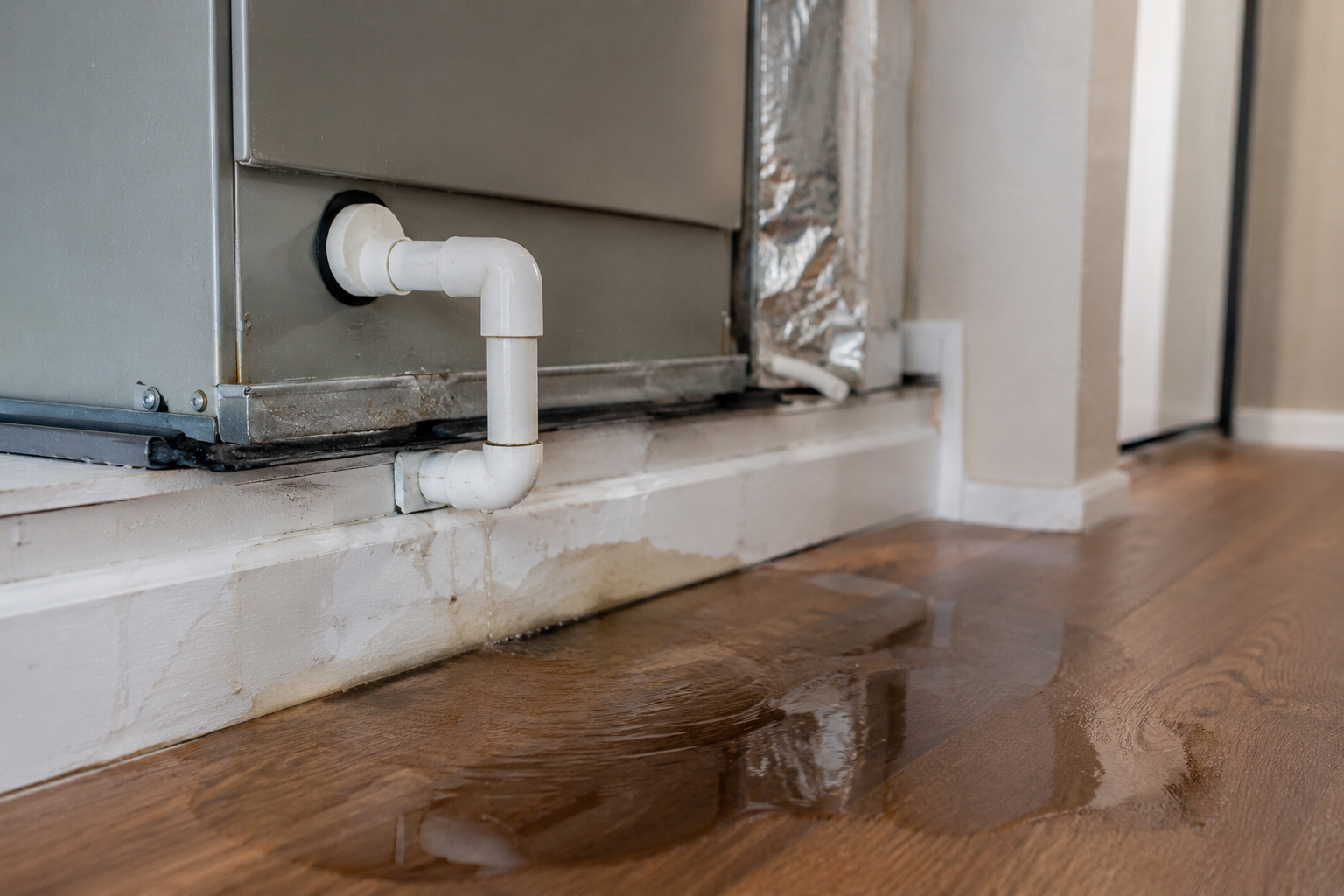
Finding water around your indoor air conditioner can be alarming. Many Orange County homeowners assume a leaking AC means the system is failing, but in many cases, the issue can be repaired if caught early.
While air conditioners naturally produce condensation as they cool your home, water should never be leaking onto your floors, walls, or ceiling. If it is, your system likely has a problem that needs attention.
Is It Normal for an Air Conditioner to Produce Water?
Yes. During the cooling process, your air conditioner removes moisture from the air. That moisture collects on the evaporator coil and drains through a condensate drain line.
When everything is working properly, the water safely exits your home. If something blocks or disrupts that process, water can begin leaking from the indoor unit.
Common Reasons Your Air Conditioner Is Leaking Water
1. A Clogged Condensate Drain Line
This is the most common cause of AC water leaks.
Over time, dirt, dust, algae, and debris can build up inside the drain line, preventing water from flowing properly. When the line becomes blocked, water backs up into the drain pan and eventually overflows.
Signs of a clogged drain line include:
- Water around the indoor unit
- Musty odors
- Increased indoor humidity
- Water stains near the air handler
2. A Dirty Air Filter
A clogged air filter restricts airflow across the evaporator coil.
When airflow is reduced, the coil can become too cold and freeze. Once the ice melts, it can create more water than the drain system can handle, resulting in leaks.
Replacing your air filter regularly is one of the easiest ways to help prevent this problem.
3. A Frozen Evaporator Coil
Low airflow isn't the only thing that can cause a frozen coil.
Low refrigerant levels, dirty coils, and mechanical issues can also cause ice to form on the evaporator coil. When the ice eventually melts, excess water may overflow the drain pan.
Common signs include:
- Reduced cooling performance
- Ice buildup on refrigerant lines
- Water around the indoor unit
- Longer cooling cycles
4. A Damaged or Rusted Drain Pan
Most air conditioners have a drain pan designed to collect condensation before it exits through the drain line.
Over time, older drain pans can rust, crack, or corrode. Even a small crack can allow water to escape and damage surrounding areas.
This issue is especially common in older HVAC systems.
5. Low Refrigerant Levels
When refrigerant levels drop, system pressure changes can cause the evaporator coil to become excessively cold and freeze.
As the ice melts, water may overflow the drain system and leak into your home.
In addition to water leaks, low refrigerant can cause:
- Poor cooling performance
- Higher energy bills
- Longer run times
- Warm air from vents
Why You Shouldn't Ignore an AC Water Leak
Even a small leak can lead to costly damage if left untreated.
Potential consequences include:
- Water damage to flooring
- Ceiling stains
- Mold and mildew growth
- Reduced indoor air quality
- HVAC system damage
- Higher repair costs
The sooner the issue is diagnosed, the easier and less expensive it is usually to fix.
How to Prevent Air Conditioner Water Leaks
The best way to prevent AC leaks is through regular HVAC maintenance.
Professional maintenance helps:
- Clear condensate drain lines
- Inspect drain pans
- Check refrigerant levels
- Clean evaporator coils
- Improve system efficiency
- Catch small issues before they become expensive repairs
Most Orange County homeowners should have their HVAC system professionally serviced at least once per year.
Need AC Leak Repair in Orange County?
If your air conditioner is leaking water, don't wait for the problem to get worse.
At Air Care Heating & Air Conditioning, we help Orange County homeowners diagnose and repair AC leaks quickly. Whether it's a clogged drain line, frozen evaporator coil, refrigerant issue, or damaged drain pan, our experienced technicians can identify the problem and restore your system's performance.
Contact Air Care today to schedule your AC inspection and keep your home comfortable, dry, and cool all summer long.