

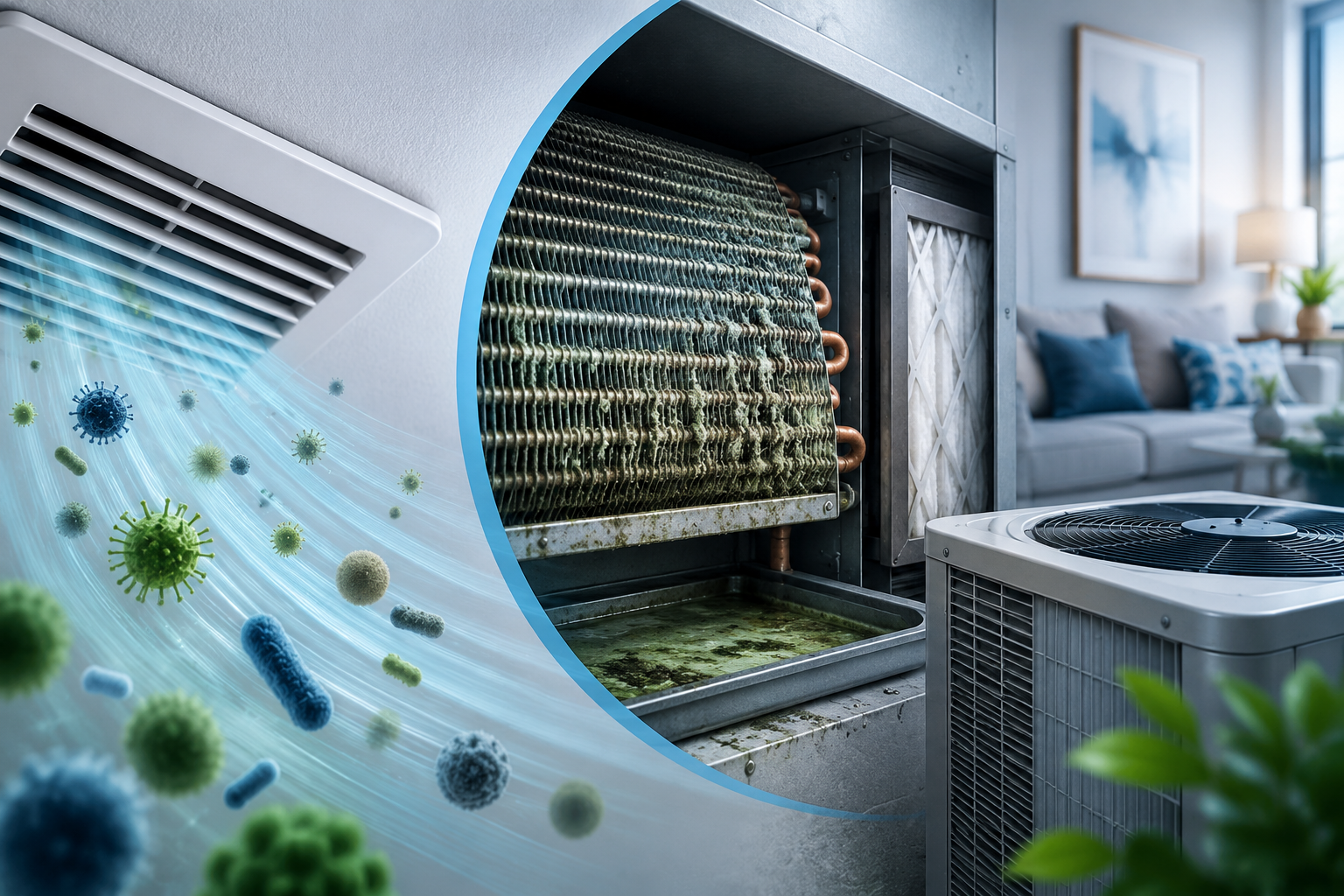
Most homeowners think about their HVAC system when it stops cooling or heating properly. However, one of the most common issues we find during service visits has nothing to do with temperature—it has to do with indoor air quality.
Microbial growth can develop inside an HVAC system when moisture, dust, and organic debris accumulate on key components. Left untreated, it can affect indoor air quality, contribute to unpleasant odors, and reduce overall system efficiency.
Where Does Microbial Growth Occur in HVAC Systems?
Several areas of your heating and cooling system can be susceptible to microbial growth, including:
- Evaporator coils
- Condensate drain pans
- Air ducts
- Supply and return vents
- Air handlers
- Filters
When condensation forms during normal air conditioning operation, moisture can remain on system components. If dirt and debris are present, conditions become favorable for microbial growth.
Signs Your HVAC System May Have Microbial Growth
Many homeowners don't realize there is an issue until symptoms become noticeable.
Common warning signs include:
Musty Odors
A persistent musty smell coming from vents is one of the most common indicators.
Increased Allergy Symptoms
Poor indoor air quality may contribute to irritation for sensitive individuals.
Visible Growth Around Vents
Dark discoloration or buildup near supply registers can indicate moisture-related issues.
Excess Humidity Indoors
High indoor humidity levels can increase the likelihood of microbial growth throughout the system.
Reduced System Performance
Dirty coils and airflow restrictions can make your HVAC equipment work harder than necessary.
Why Orange County Homes Are Vulnerable
Many Orange County homeowners run their air conditioning systems for much of the year. Coastal humidity, combined with condensation produced during cooling cycles, can create ideal conditions for moisture buildup.
Homes in Mission Viejo, Rancho Santa Margarita, Lake Forest, Irvine, Laguna Niguel, Laguna Hills, Aliso Viejo, and surrounding communities are particularly susceptible when HVAC systems are not regularly maintained.
How to Prevent HVAC Microbial Growth
The good news is that prevention is often straightforward.
Schedule Regular HVAC Maintenance
Routine inspections help identify moisture issues before they become major problems.
Replace Filters Regularly
Clean filters help reduce dust and debris circulating through the system.
Keep Drain Lines Clear
Proper condensate drainage helps prevent standing water inside equipment.
Consider Indoor Air Quality Solutions
Advanced filtration systems and air purification products can help improve indoor air quality and reduce contaminants.
Clean Evaporator Coils
Professional coil cleaning removes buildup that can trap moisture and create favorable conditions for microbial growth.
Professional HVAC Inspections Matter
Microbial growth is not always visible to homeowners. A professional HVAC inspection can identify hidden moisture problems, airflow restrictions, and indoor air quality concerns before they worsen.
At Air Care Heating & Air Conditioning, our technicians perform thorough inspections designed to help Orange County homeowners maintain cleaner air, healthier homes, and more efficient HVAC systems.
If you've noticed musty odors, excessive dust, or concerns about your home's indoor air quality, contact Air Care Heating & Air Conditioning at 949-482-2911 to schedule a professional HVAC inspection today.
Air Care Heating & Air Conditioning
The Air You Trust. The Care You Deserve.