

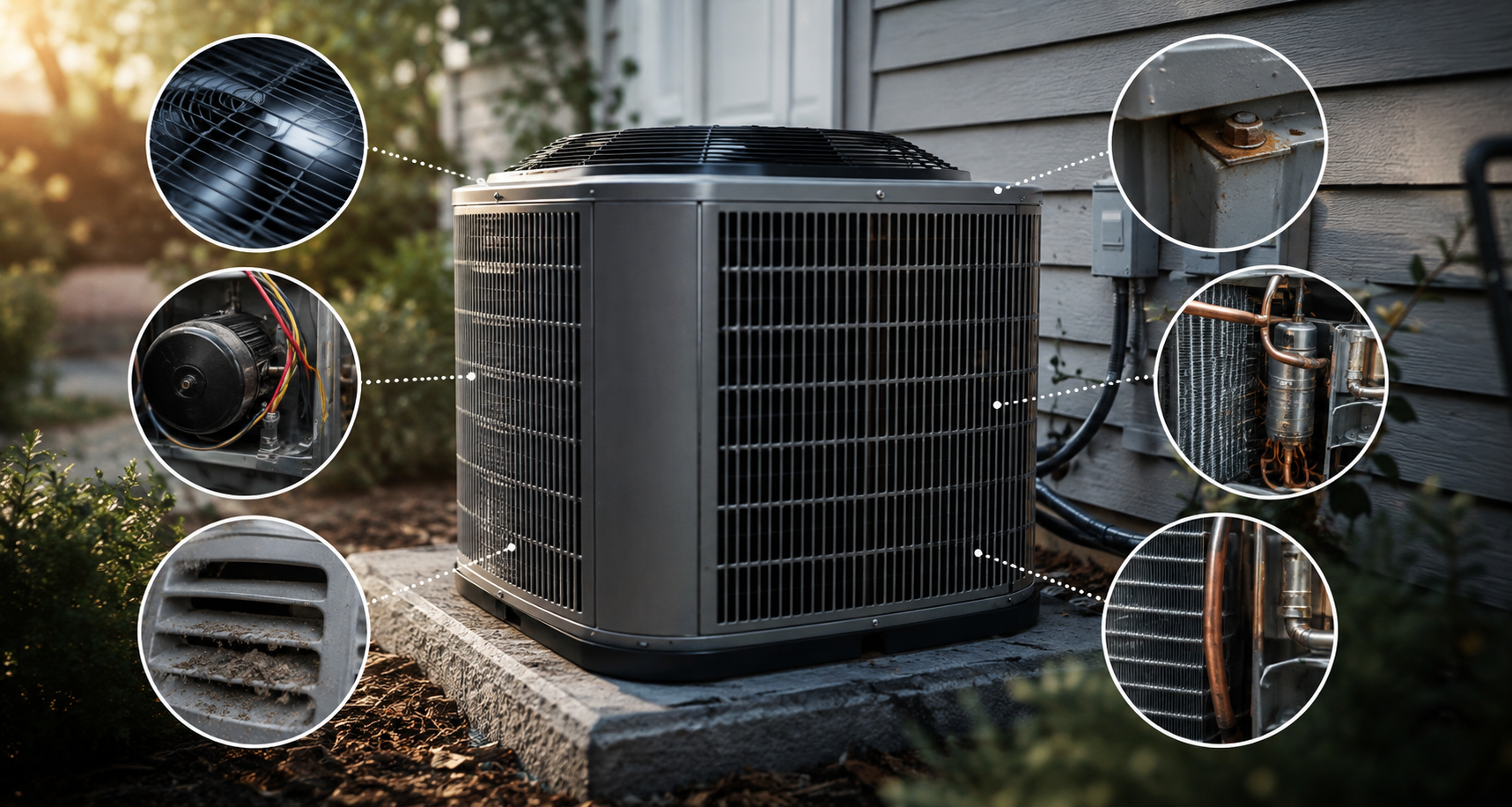
Air conditioners aren't completely silent. You expect to hear your system start, the outdoor unit run, and air moving through your vents.
But what happens when a normal AC sound suddenly turns into buzzing, banging, rattling, screeching, clicking, or humming?
An unusual noise can be your HVAC system's way of telling you something isn't operating correctly. The U.S. Department of Energy includes unusual HVAC noises among the situations when homeowners should contact an HVAC professional.
For Orange County homeowners, knowing what different AC noises may mean can help you determine when it's time to schedule an inspection.
Why Is My AC Buzzing?
A buzzing sound is one of the more common complaints homeowners notice around an outdoor AC unit.
Depending on where the sound originates, buzzing could potentially involve an electrical component, motor, loose component, or another mechanical issue.
If the outdoor unit is buzzing but the fan isn't spinning or the AC isn't cooling, don't repeatedly attempt to restart the system. A qualified HVAC technician can test the system and determine what's preventing it from operating normally.
Why Is My AC Humming?
A low, steady hum while an air conditioner is operating can be normal. What's more important is noticing a new or unusually loud humming sound.
If the sound suddenly changes, becomes louder, or is accompanied by poor cooling, it deserves attention.
Electrical connections and motors are among the components HVAC professionals inspect during routine maintenance because faulty connections and component problems can affect system operation and equipment life.
Why Is My Air Conditioner Rattling?
Rattling may be something relatively simple, such as debris near the outdoor unit, but it can also indicate a loose panel or component.
Start by visually checking the area around the condenser. Leaves, branches, and other debris should be kept away from outdoor HVAC equipment. ENERGY STAR recommends keeping outdoor units clean and clear of debris as part of proper HVAC maintenance.
If the rattling is coming from inside the equipment, however, it's better to have the system inspected rather than opening the unit yourself.
What Does a Screeching or Squealing AC Mean?
A high-pitched screech or squeal is hard to miss.
These sounds may be associated with motors, bearings, or other moving components within the HVAC system. The exact cause can't be determined from the sound alone, so professional diagnosis is important.
If the noise is extremely loud or begins suddenly, turning the system off until it can be evaluated may help prevent additional damage.
Why Is My AC Making a Banging or Clanking Sound?
Banging and clanking aren't sounds you should consider normal.
They may indicate that something has become loose or that a moving component isn't operating correctly.
The severity can vary significantly, which is why it's better not to assume the system is safe to continue running simply because it's still producing cold air.
Why Is My AC Making a Clicking Noise?
A click when your air conditioner starts or stops can be completely normal.
Repeated clicking is different.
If your thermostat is calling for cooling and you hear repeated clicking but the system doesn't start normally, there may be an electrical or control-related problem.
A technician can inspect the starting cycle and controls to make sure the equipment starts, operates, and shuts down properly.
What Does a Hissing Sound From an AC Mean?
Hissing deserves professional attention because there are several possible causes.
It could involve airflow, pressure, ductwork, or potentially a refrigerant-related problem depending on where the noise originates.
Refrigerant levels are another part of an AC system that should be properly evaluated. Too much or too little refrigerant can reduce efficiency and contribute to equipment problems.
Should I Turn My AC Off If It's Making a Loud Noise?
It depends on the sound, but a sudden, severe, or abnormal mechanical noise shouldn't be ignored.
Consider shutting the system down and calling an HVAC professional if you hear:
- Loud banging or clanking
- Grinding or metal-on-metal sounds
- Severe screeching
- Repeated clicking when the system won't start
- A loud buzz accompanied by a fan that isn't running
- Any new noise combined with burning smells, poor airflow, or loss of cooling
Continuing to run equipment that isn't operating correctly can potentially turn one failed component into a larger repair.
Don't Ignore a New AC Noise
One of the best things you can do is become familiar with what your HVAC system normally sounds like.
If you've had the same air conditioner for years, you probably know its normal startup and operating sounds without even realizing it.
So when something suddenly sounds different, pay attention.
Preventive HVAC maintenance is intended not only to improve performance but also to catch problems before they turn into unwanted repairs. ENERGY STAR recommends regular professional maintenance and notes that dirty coils, airflow problems, improper refrigerant levels, and faulty electrical connections can all affect system performance.
AC Repair in Orange County, CA
If your air conditioner is buzzing, humming, rattling, clicking, screeching, or making another unusual noise, Air Care Heating & Air Conditioning can help.
Our experienced HVAC technicians provide AC diagnostics, air conditioning repair, maintenance, and HVAC replacement throughout Orange County, California.
We'll inspect your system, determine what's causing the noise, and explain your options before moving forward with repairs.
Don't wait for a strange noise to become a no-cooling call.
Air Care Heating & Air Conditioning
Where Air Meets Care