

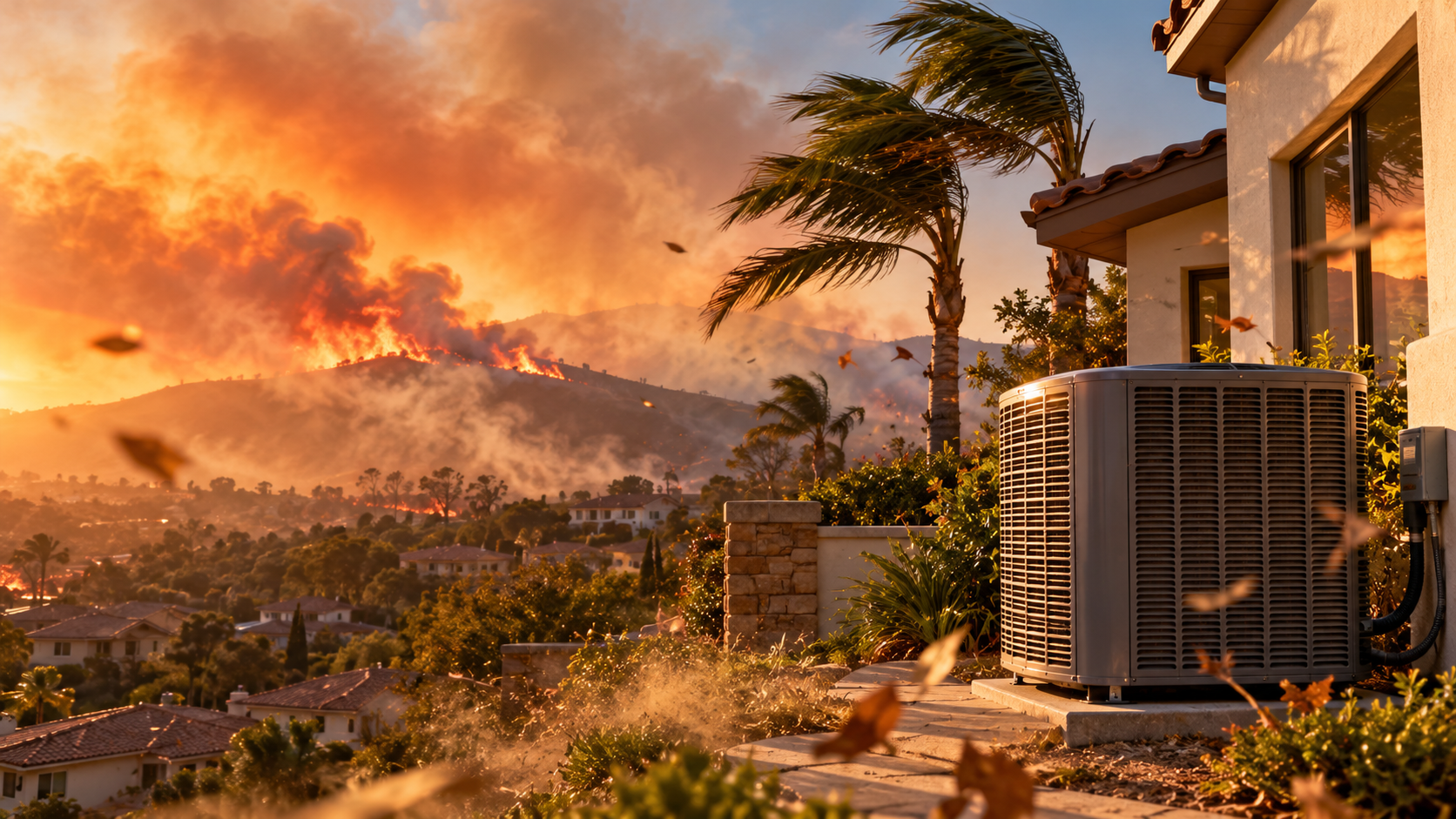
How to protect your indoor air quality and keep your heating and cooling system working efficiently during Southern California's windy season.
Fall in Orange County often brings cooler mornings, warm afternoons, and the return of Santa Ana winds. While these dry, gusty winds are a familiar part of Southern California living, they can create challenges for homeowners, particularly when it comes to indoor air quality and HVAC performance.
From Irvine and Mission Viejo to Lake Forest, Laguna Niguel, Rancho Santa Margarita, and surrounding communities, homeowners may notice more dust, smoky odors, or changes in how their heating and cooling systems operate during windy conditions.
But what happens to your HVAC system when Santa Ana winds arrive? And what can you do to help keep your home's air cleaner?
At Air Care Heating & Air Conditioning, we help Orange County homeowners maintain comfortable, efficient homes throughout the year. Here's what you should know.
Why Santa Ana Winds Matter for Orange County Homes
Santa Ana winds are typically warm, dry winds that blow from inland areas toward the Southern California coast. They can occur during fall and winter and are known for creating dry conditions and increasing wildfire danger.
For homeowners, these winds can also bring:
Windblown dust and debris
Increased airborne particles
Dry indoor conditions
Smoke and ash when wildfires are affecting the region
Debris accumulating around outdoor HVAC equipment
Even when a wildfire isn't nearby, dust and airborne particles can enter homes through open windows, doors, and gaps in the building.
When wildfire smoke is present, fine particles can also make their way indoors, affecting the quality of the air your family breathes.
That's why preparing your HVAC system before and during windy weather is an important part of home maintenance.
1. Your HVAC Air Filter May Need More Attention
One of the first places to check during Santa Ana wind season is your HVAC air filter.
Your heating and cooling system circulates air throughout your home. As that air passes through the filter, airborne particles such as dust and pollen can become trapped.
During periods of heavy dust or wildfire smoke, filters may collect particles faster than usual.
A dirty or clogged filter can restrict airflow, potentially causing:
Reduced heating and cooling efficiency
Longer system operating times
Uneven temperatures
Additional strain on HVAC components
Reduced filtration performance
What should Orange County homeowners do?
Check your HVAC filter more frequently during dusty or smoky conditions. Replace it when needed, following the manufacturer's recommendations.
For homeowners concerned about wildfire smoke, a MERV 13 filter can capture more fine particles than many standard filters. However, not every HVAC system can accommodate a higher-efficiency filter without affecting airflow.
Before upgrading, have a qualified HVAC technician confirm which filter rating is appropriate for your system.
2. Wildfire Smoke Can Affect Your Indoor Air Quality
One common question homeowners ask is:
"Should I run my AC when there's wildfire smoke outside?"
In many cases, yes. A properly operating central HVAC system can help circulate and filter indoor air, provided it has a clean, suitable filter and isn't bringing smoky outdoor air inside.
During smoky conditions, homeowners should:
Keep windows and exterior doors closed.
Use recirculation mode if the system has an outdoor-air intake.
Keep the HVAC filter clean and properly fitted.
Consider a compatible high-efficiency filter.
Use a portable HEPA air cleaner in frequently occupied rooms.
Avoid using whole-house fans that pull smoky outdoor air indoors.
If your central system has an effective filter, running the fan more frequently can increase filtration. However, this may increase electricity consumption, and the filter should be monitored for buildup.
Remember, an HVAC filter cannot eliminate every gas, odor, or pollutant associated with wildfire smoke. Proper filtration helps reduce particle exposure, but it doesn't guarantee completely clean indoor air.
For current air quality conditions, homeowners can check the South Coast Air Quality Management District or AirNow.
3. Santa Ana Winds Can Leave Debris Around Your Outdoor AC Unit
Your outdoor air conditioning unit needs adequate airflow to operate efficiently.
Strong winds can blow leaves, dirt, branches, and other debris around the equipment. When debris collects near the unit or blocks airflow through its coils, cooling performance may suffer.
After windy weather, take a few minutes to visually inspect your outdoor HVAC equipment.
Look for:
Leaves or branches around the unit
Loose debris blocking airflow
Visible damage to panels or components
Unusual sounds during operation
Changes in cooling performance
Remove loose debris from the surrounding ground only when it is safe to do so.
Avoid opening equipment panels, touching electrical components, or attempting repairs yourself.
If the unit appears damaged or isn't operating normally, schedule a professional inspection.
4. Why Your Home May Feel Dustier During Windy Weather
Have you noticed more dust collecting on furniture during Santa Ana wind events?
Even with windows closed, outdoor particles may enter through gaps around doors, windows, and other openings.
Once inside, these particles can circulate through the home.
A properly maintained HVAC system can help filter airborne dust, but additional improvements may be needed depending on the condition of your home and equipment.
Consider the following:
Inspect your air filter. Make sure it fits properly and doesn't allow air to bypass the filter.
Check visible gaps. Weatherstripping and sealing around windows and doors can help reduce outdoor air infiltration.
Evaluate your ductwork. Leaky return ducts in attics or other unconditioned spaces may draw dust into the system.
Consider indoor air filtration options. Depending on your HVAC equipment, upgraded filtration or a separate air cleaner may help reduce airborne particles.
If excessive dust continues even after changing your filter, a professional HVAC inspection can help identify potential airflow or duct-related issues.
5. Can Santa Ana Winds Make Your HVAC System Work Harder?
Yes, depending on the conditions.
Santa Ana wind events can bring unusually warm temperatures to Orange County, even during fall.
When outdoor temperatures rise, homeowners may need to run their air conditioners more frequently.
At the same time, dirty filters, restricted airflow, or debris around outdoor equipment can reduce system efficiency.
Signs your HVAC system may need attention include:
Weak airflow from supply vents
Rooms taking longer than usual to cool
Unusual operating noises
Frequent system cycling
Unexpected increases in electricity consumption
Difficulty maintaining your thermostat setting
These symptoms don't always indicate a major repair, but they shouldn't be ignored.
A professional HVAC technician can inspect the equipment, evaluate airflow, and identify problems before they become more serious.
6. Should You Schedule HVAC Maintenance After a Wind Event?
Not every windy day requires a service appointment.
However, an inspection may be worthwhile if your system has been exposed to significant dust or debris, appears damaged, or is no longer operating as expected.
Professional maintenance may include checking:
Air filters and airflow
Outdoor condenser condition
Electrical components
System operation
Heating and cooling performance
Visible ductwork or ventilation concerns
Fall is also a convenient time to prepare your heating system for cooler evenings.
With Orange County's changing temperatures, having both heating and cooling equipment ready can help prevent inconvenient breakdowns.
7. How Orange County Homeowners Can Prepare Before the Next Santa Ana Wind Event
A little preparation can make a difference.
Before windy conditions:
Check your HVAC filter.
Keep replacement filters available.
Clear loose debris away from outdoor equipment.
Check that windows and exterior doors close properly.
Review local air quality forecasts.
During dusty or smoky conditions:
Keep windows and doors closed.
Avoid bringing smoky outdoor air into the home.
Use appropriate HVAC filtration.
Consider a portable HEPA air cleaner.
Follow local public health and air quality advisories.
After the winds pass:
Inspect your filter for excess buildup.
Check around outdoor HVAC equipment for debris.
Monitor your system for unusual performance.
Schedule service if you notice damage, weak airflow, or operational problems.
These simple steps can help protect your equipment and improve your home's indoor environment.
8. When Should You Call an HVAC Professional?
Consider scheduling an appointment if:
Your HVAC system struggles to heat or cool your home.
Your air filter becomes unusually dirty.
You notice persistent dust around supply vents.
Your outdoor unit has visible wind-related damage.
You want to explore higher-efficiency filtration.
You're concerned about duct leakage or poor airflow.
A trained HVAC professional can evaluate your system and recommend solutions based on your equipment and home's needs.
Air Care Helps Orange County Homeowners Stay Comfortable Year-Round
At Air Care Heating & Air Conditioning, we understand the challenges Southern California weather can create for residential HVAC systems.
Whether you're preparing for Santa Ana winds, concerned about indoor air quality, or noticing changes in your heating and cooling performance, our team is here to help.
We proudly serve homeowners throughout Orange County, including Irvine, Mission Viejo, Lake Forest, Laguna Hills, Laguna Niguel, Aliso Viejo, Rancho Santa Margarita, Ladera Ranch, Trabuco Canyon, and surrounding communities.
From HVAC maintenance and repairs to filtration and indoor air quality solutions, our goal is to help you maintain a comfortable, efficient home.
Don't wait until dust, debris, or airflow problems affect your comfort.
Contact Air Care Heating & Air Conditioning today to schedule your HVAC service.
Call (949) 482-2911
The Air You Trust. The Care You Deserve.